Bringing SMS Information to the masses
Company: Cocentrica B.V.
Year: 1998
Role: Project Lead, concept developer, partnership manager, marketing manager
Disciplines: Mobile applications • Operations • Workflow automation • Process improvement
The Challenge
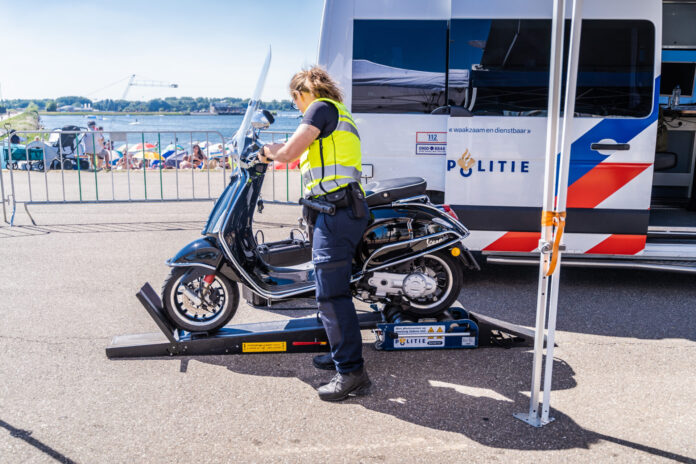
Young moped riders in the Netherlands are allowed to ride starting at the age of 16, albeit with a pretty limited speed restriction. To avoid these speed restrictions, thousands of these 80s and 90s era riders would “tweak” their engine to speed things up. This was such a common occurrence that the Dutch police would regularly stop riders and place the moped on a so called “Rollerbank”, or mobile dynamometer.
If caught with a tweaked engine, the penalties were very high, and almost always included the confiscation of the moped.
Confronted with this problem, I conceived the idea of using the ever improving technology behind SMS information services. The idea was to capture locations of these police actions and broadcast it to subscribers with a phone capable of receiving SMS messages.
The Opportunity
SMS messaging volume was exploding, and with it came the opportunity to launch reverse billing services. These services allow vendors like myself to broadcast messages to subscribers, and charge them per message on their monthly phone bill. At the time, these messages could cost as much as $1 each. With several local police actions each day in the Dutch provinces, the opportunity could potentially earn tens of thousands of Dutch Guilders daily.
The objectives included:
- Capturing locations by phone (toll free), email or free SMS message
- Formatting the message and assigning to a provincial queue
- Developing a sign-up site
- Integration with the reverse billing systems for four Dutch mobile operators
- Financial management system
- Launching a target marketing campaign
The project wasn’t just about software—it was about designing a better workflow to encourage moped riders to report locations, format the captured data and filter out potential fake reports, then broadcast it to subscribers.
My Role
I participated in the design and development of the solution, helping translate operational requirements into a practical tool that users could rely on in real-world conditions.
My responsibilities included:
- Understanding real-world business requirements.
- Designing the reporting workflow.
- Developing and refining the user experience.
- Working with stakeholders throughout implementation (web designers, mobile phone operators, and groups of moped users)
- Supporting deployment and ongoing improvements.
Design Philosophy
One of the guiding principles behind RoadCheck was that technology should reduce effort, not create it. Everything behind the service was new – not just to use as the designers, but also the end-users. SMS information services had only just launched, and most mobile phone subscribers hadn’t even received a standard SMS message from a friend, let along a subscription based information provider.
Because the concept was still so new, every step was a learning opportunity I was able to carry with me on future endeavors. That philosophy influenced every design decision.
Technical Highlights
Although today’s mobile applications make digital information commonplace, projects like RoadCheck helped demonstrate the advantages of carrying a mobile device that could suddenly do so much more than make phone calls.
Technical highlights included:
- The first use of the newly developed API provided by the Dutch mobile operators
- Interactive voice response system utilizing ISDN lines and a 4-line PBX for toll-free calls used for reporting
- Voicemail to email server for remote capture of police reports
- Very early gamification solution to highlight and reward regular reporters
- In-house developed SMS finance platform to manage reverse billed revenue
Results
The Roadcheck project quickly overwhelmed our 2-person team. After just 2 months, we were approached by the largest Dutch mobile operator to syndicate our data for their own SMS information service. To us, this was a clear case of David VS Goliath, and we were fully aware that if we did not agree to syndicate the data, they would most likely copy our entire business model. Thankfully, syndication ended up being one of the best decisions we ever made because revenue from the syndication deal far outgrew what we managed on our own, and we no longer had to spend a lot on marketing as the operator marketed the service to every single subscriber.
In fact, Roadcheck was so popular that we quickly added “Flitspaal” reports, alerting car users to police cameras placed on the side of the road. With its very extensive road network, The Netherlands provided us with the opportunity to add hundreds of road codes to our subscription options.
Roadcheck grew year over year, until the dawn of smartphone. We eventually sold the operation to a large mobile news provider who operated it successfully until 2009.
Lessons Learned
Roadcheck confirmed my hunch that mobile first would be the future. Even without smartphones, users craved handheld access to information, and we provided it any way the current generation technology would allow. My time with Roadcheck also taught me many valuable marketing tricks, which translated well into the future. Roadcheck also taught me the art of the pivot, letting me turn a possibly languishing project into a success by turning it into something even bigger.
And finally, Roadcheck taught me to think big. Why built for just one mobile operator when the market provides access to four of them? Always offer up your services to the largest possible market.
Looking Back
Looking back, RoadCheck represented an important step in my career because it focused on solving practical problems rather than simply building new technology.
It reinforced a principle that has remained constant throughout many of my projects:
The best solution is often invisible. When users can focus on the information instead of the tool they’re using, the technology has done its job well.
Project Snapshot
| Category | Details |
|---|---|
| Project | RoadCheck |
| Industry | Mobile Data Communications |
| Year | 1998 |
| Role | Owner/founder and project manager/ markeitng manager |
| Focus | Mobile Information Services |
| Technologies | SMS MO, SMS broadcast, IVR, ISDN |
| Outcome | Happy moped users with fewer tickets, excellent YoY revenue |